What the machine shop is for
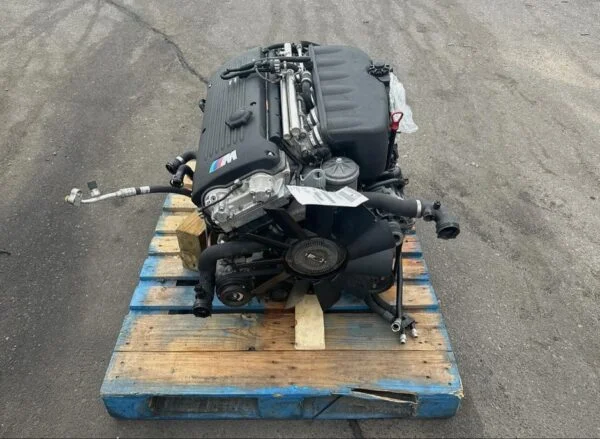
The machine shop restores the geometry an engine depends on. Bores must be round and straight, the cylinder head must be flat, the crankshaft must run in aligned bearing bores, and each surface must have the right finish. New bearings, rings, and gaskets only seal and last when the surfaces they work against are within the limits BMW specifies.
The order of work is measure, machine, measure again. The rebuilder records the condition of each part, the machine shop corrects what is out of limits, and the finished part is measured once more before assembly. If a shop cannot show the before and after figures, there is no way to know whether the job was needed or whether it was done correctly.
Honing the cylinder bores
Honing uses rotating abrasive stones that move up and down the bore to leave a fine cross-hatch pattern. The pattern holds a film of oil and gives new piston rings a surface to bed into. A light hone on a bore that is within limits is often called a deglaze. A heavier hone follows boring when the cylinder has been opened up for oversize pistons.
The angle of the cross-hatch and the finish of the surface both matter. Many machine shops use a plateau finish, where the peaks left by the coarse stones are removed with a finer stage so that the rings seat quickly and oil consumption settles sooner. For high-output builds, some shops hone with a torque plate bolted to the block to mimic the distortion caused by a tightened cylinder head.
Honing cannot correct a bore that is badly tapered, oval, or scored. Those bores need boring oversize with matching pistons, or a liner. Some BMW engines use coated or special alloy bore surfaces that need a specialist process, and for some of them oversize pistons are not offered at all. Confirm what is possible for that engine code before the block goes to the shop.
Line boring and line honing
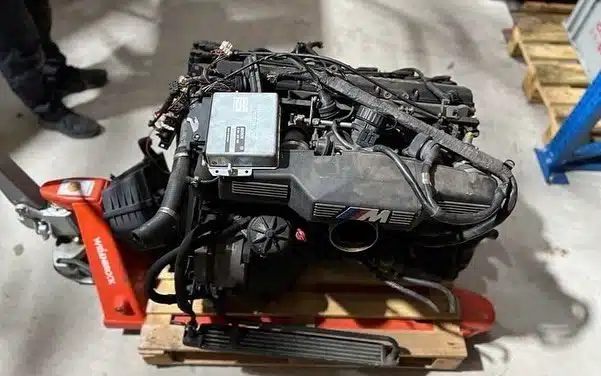
The main bearing bores carry the crankshaft. They must be round, the correct size, and in a straight line along the block. A spun main bearing, severe overheating, or a replaced main cap can leave them out of alignment. A crankshaft running in misaligned bores loads its bearings unevenly and wears them quickly, however good the new shells are.
Line boring corrects this by cutting all the main bores in one pass along a common axis. Where only a small correction is needed, line honing achieves the same result with a finer finish. The caps are usually machined slightly first so that the bores can be cut back to the correct diameter. Caps are matched to their block and their position and must never be swapped.
Many BMW engines use a bedplate or bearing ladder rather than individual caps. Machining these designs needs the correct fixtures and experience, and not every machine shop has both. When the bores are damaged beyond what can be corrected, a replacement crankcase or a complete replacement engine is usually the realistic answer.
Skimming the cylinder head
A cylinder head that has overheated can bow along its length, and the long aluminium heads of inline six-cylinder engines are especially sensitive to this. Flatness is checked with a precision straightedge along the length, across the width, and diagonally. If the face is out of limits, skimming removes a thin layer of material to make it flat again.
BMW sets a minimum head height for each engine, and once it is reached the head must be replaced rather than skimmed again. Removing material also brings the valves and pistons slightly closer together and changes the compression ratio. On many BMW diesels the head gasket is supplied in more than one thickness and is chosen by measuring piston protrusion, so the gasket is selected after machining, not before.
Skimming the face does not straighten the camshaft bearing bores. A head that has warped badly may also have bent its camshaft line, which shows up as a camshaft that binds when turned by hand in the bare head. That check should be made before any money is spent on valve work or on the skim itself.
Valve seats, guides, and crack testing
Head work usually continues with the valves. Worn guides are replaced, the valve seats are recut so that each valve seals on a narrow, even contact band, and the valves are refaced or replaced. New valve stem seals are always fitted. A vacuum or leak test on the assembled head confirms that the valves seal before the head goes back on the engine.
Before any of this, the head should be crack tested and pressure tested. Cracks between the valve seats and around the injector bores are a known concern on diesel heads that have overheated. Machining a cracked head is wasted money, so the test belongs at the very start of the job rather than at the end.
Cleaning after machining
Every machining process leaves abrasive residue. Honing grit and metal fines settle in oil galleries, blind holes, and bolt threads, and they will find their way into the bearings on the first start if they are not removed. The block and head should be washed, the galleries brushed through, and the threads chased before assembly begins.
Where gallery plugs can be removed, they should be, so that the passages can be cleaned properly and new plugs fitted. A block that looks clean and dry when it returns from the shop still needs a final wash on the rebuilder’s bench. Assuming that the machine shop has done this step is one of the more common causes of early bearing failure.
What to ask the machine shop
Ask for the measurements before and after each process, the finish specification used for honing, and confirmation that every machined part is still within BMW limits. Ask who supplies the oversize pistons, undersize bearings, and gaskets, and check that those parts are actually available for that engine code before any machining starts.
Agree a stop point. If the machining required turns out to be more extensive than expected, the cost of the rebuild can approach the cost of a replacement engine. At that point it is worth comparing the quote with a listed unit from Bavarian Engines Store that carries the same code, and making the decision on facts rather than on what has already been spent.
Warranty
Many engines come with up to 12 months warranty. A proper workshop must fit the engine. The warranty is for a fault inside the engine. It does not cover the wrong engine, a dry start, the wrong oil, or damage done after you open the crate.
Shipping
Crate shipping from Hamburg costs 299 EUR. We pack the engine in a strong crate and send it to the address on your order. You need a forklift or an engine crane to unload it.
FAQ
Can a warped BMW cylinder head always be skimmed?
No. Each engine has a minimum head height, and a head that is cracked or has a distorted camshaft line needs replacing even if the face could be made flat.
Do the bores need honing if only the piston rings are replaced?
New rings need a suitable surface to bed into, so a light hone is normal when the bores are within limits. If the bores are tapered, oval, or scored, honing alone will not fix them.
Is line boring needed after a spun bearing?
Not always, but the main bores must be measured. If they are out of round or out of alignment, line boring or line honing is needed before new bearings are fitted.
Do you ship machine shop work to my door?
Yes. Crate shipping from Hamburg costs 299 EUR to the address on your order.
How long is the warranty?
Up to 12 months on many engines, for a fault inside the engine, after a proper fit. See the warranty page for the full rules.
Are the photos of the real engine?
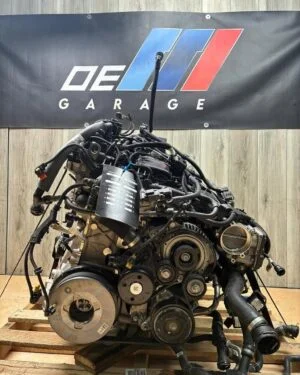
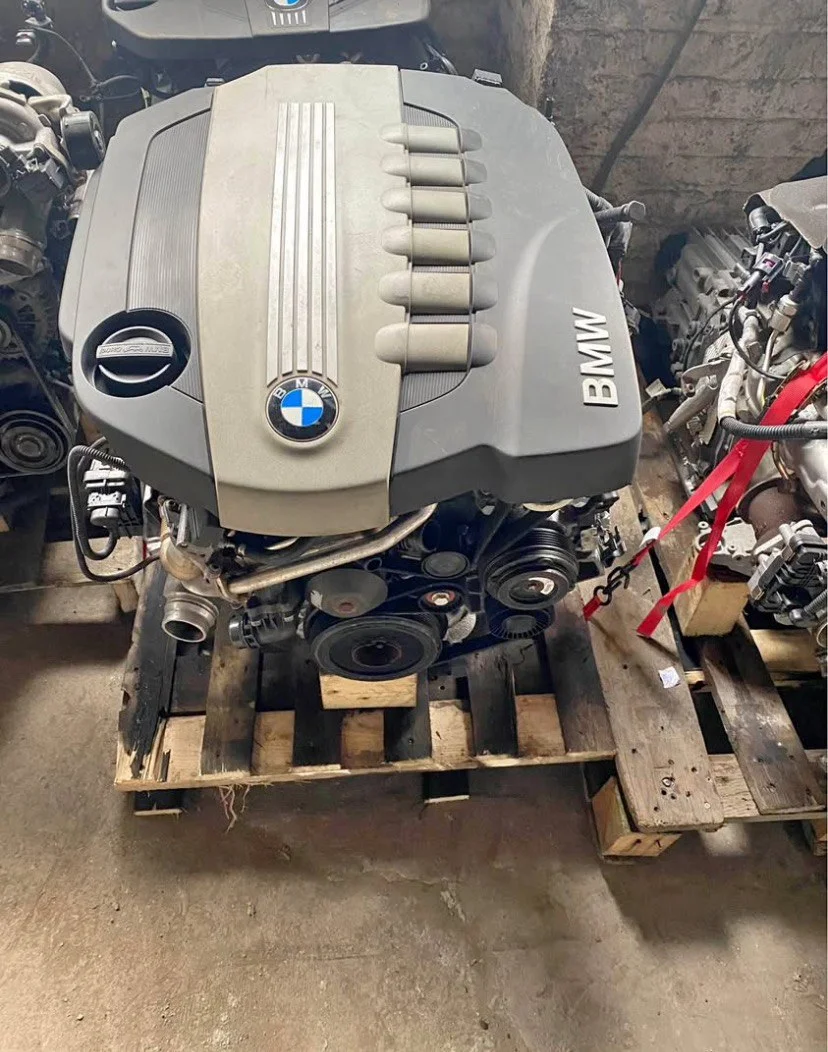
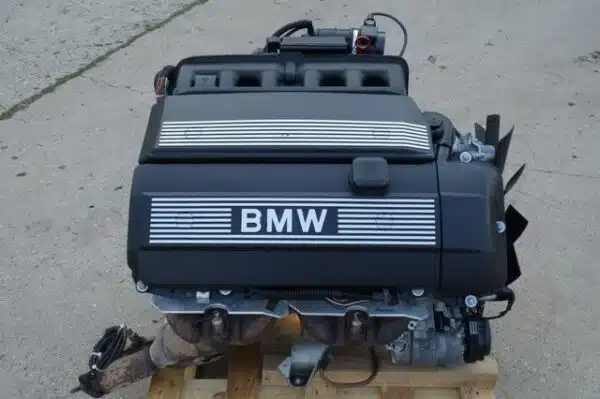
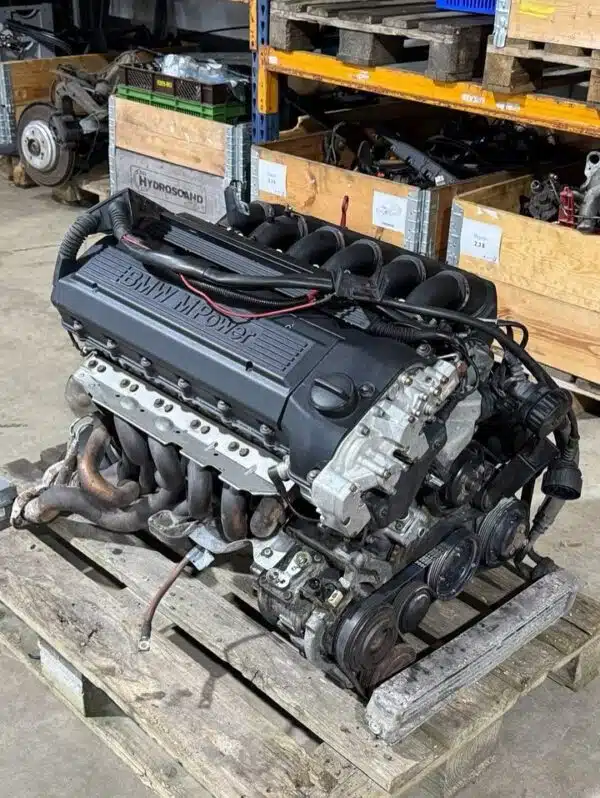
Yes. When you buy Bavarian Engines Store engines from us, the photos are real photos from our yard, not made-up pictures.
Can you check my VIN first?
Yes. The VIN check is free. Send it before you pay and we confirm the engine fits.
BMW engines by codeFree VIN check